Minimally Invasive Cochlear Implantation

Making deaf people hear
should just be a minor intervention,
available to all people in the world.

Therefore, we are making cochlear implantation a safe, fast, and affordable minimally invasive treatment for all clinics.

Innovation

Our Technology


Surgical planning software · machine learning · automated on-demand on-site production · patient-individualized medical products · precision guidance · minimally invasive surgical tools

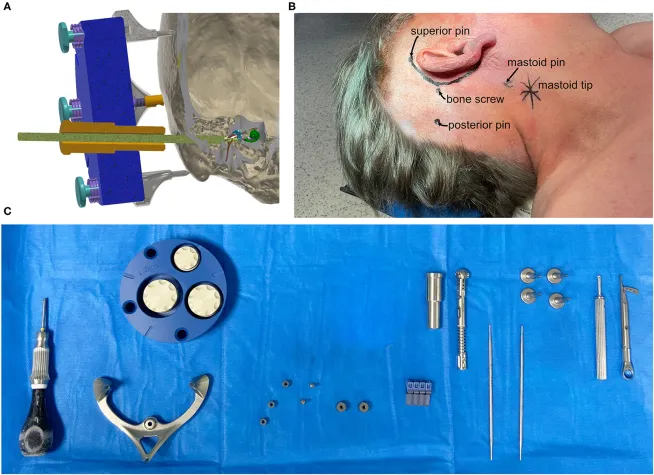
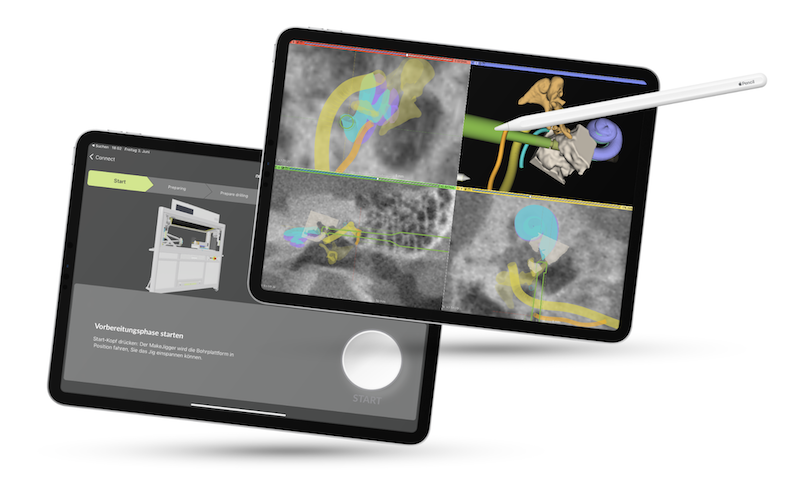
OtoJig is the name of our company and it is also the name of our high-precision mini-stereotactic system that enables minimally invasive access tunnels in human temporal bone surgeries. The system consists of a planning software conCIerge™ and several hardware devices. ConCIerge is used for image-based planning of the access tunnel.
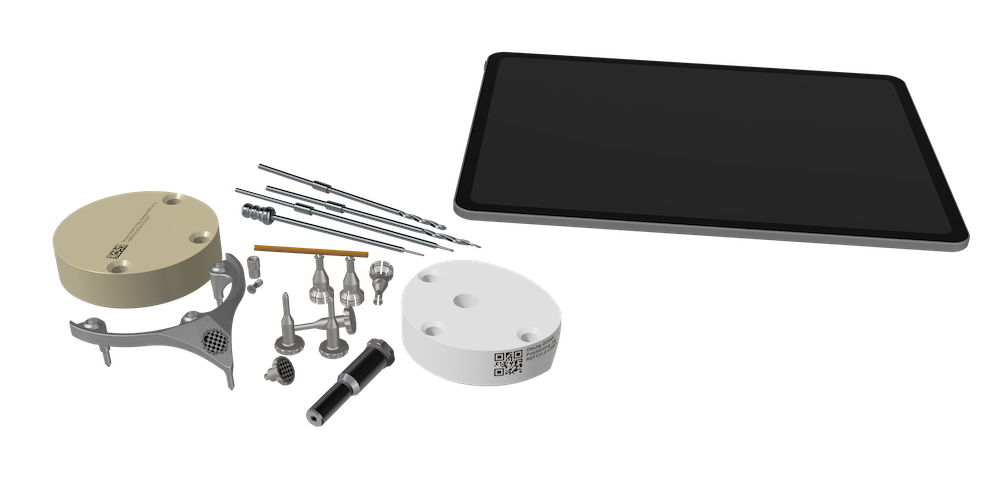
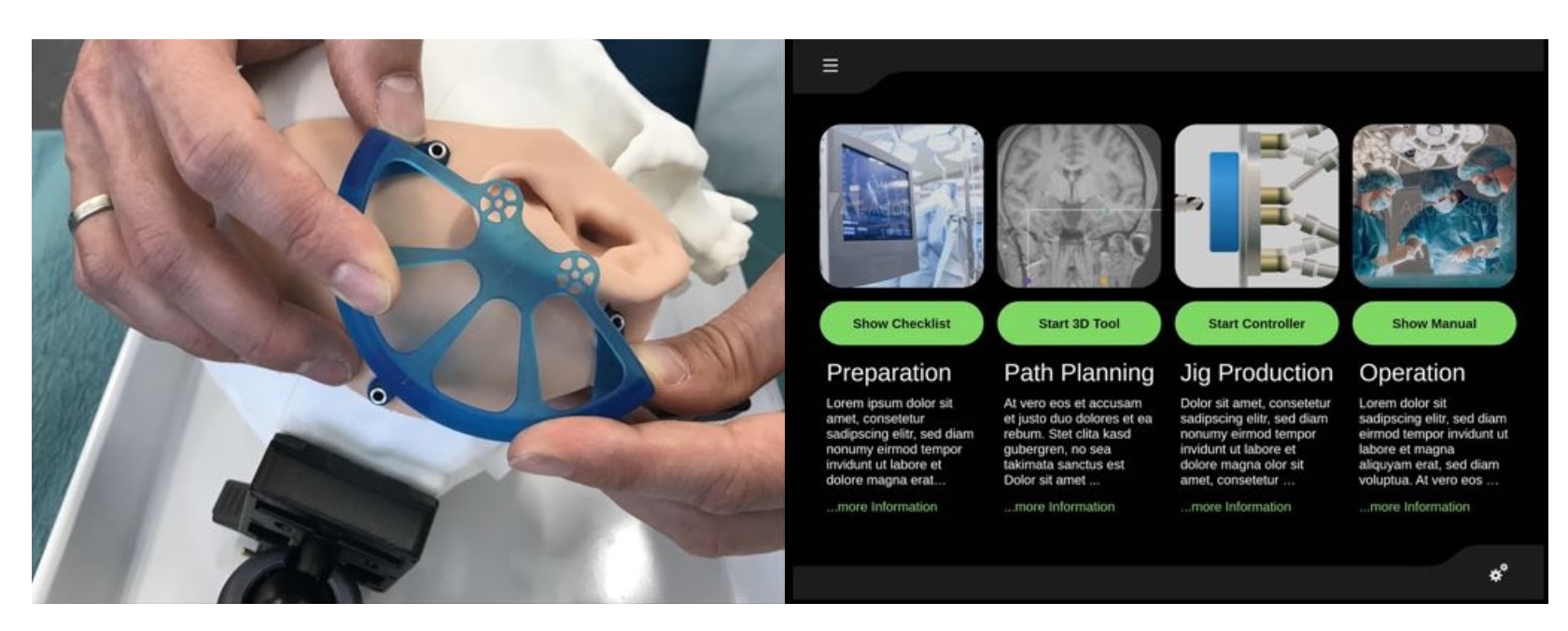
OtoJig set of hardware and an iPad representing the planning software.

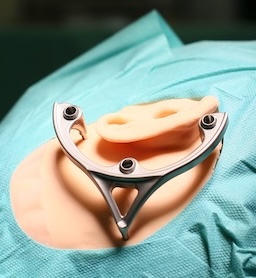
Once you realize that the target region, for example the inner ear, is in a fixed spatial relation to the skull bone, the idea becomes obvious: Localize a small bone-anchored device (e.g. our Mini-Stereotactic Frame) in a CT scan and create a patient-individualized Positioning Jig that restricts surgical tools (e.g., drills) to a safe access path, respecting the patient's anatomy.
Therefore, no expensive navigation setups or complex surgical robots are required.

Mockup of the iPad software.

After the Mini-Stereotactic Frame has been fixated to the skull and our X-Ray Marker is temporarily mounted, conCIerge™ can localize the X-Ray Marker and thus the Mini-Stereotactic Frame in a CT scan with an accuracy of up to 0.03 mm, which is approximately 10 times better than the CT scanner's resolution1.
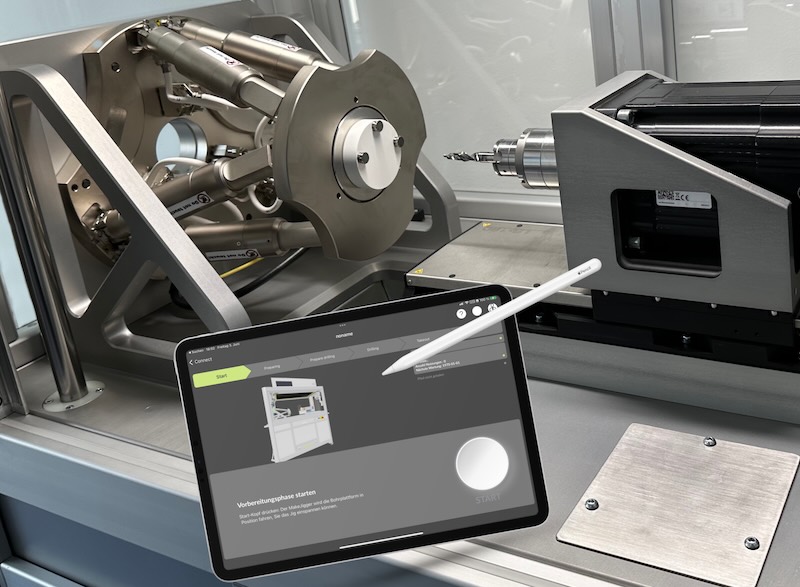
Otomat production machine showing the planning software on an iPad and a hexapod platform for positioning and a drill motor to individualize positioning jigs.

Then a patient-individualized Positioning Jig is manufactured in under 5 minutes in our Otomat production machines directly on-site in the hospital. In this automated process, a through-hole at the defined position, angle and with a depth-step is created in the Jig.

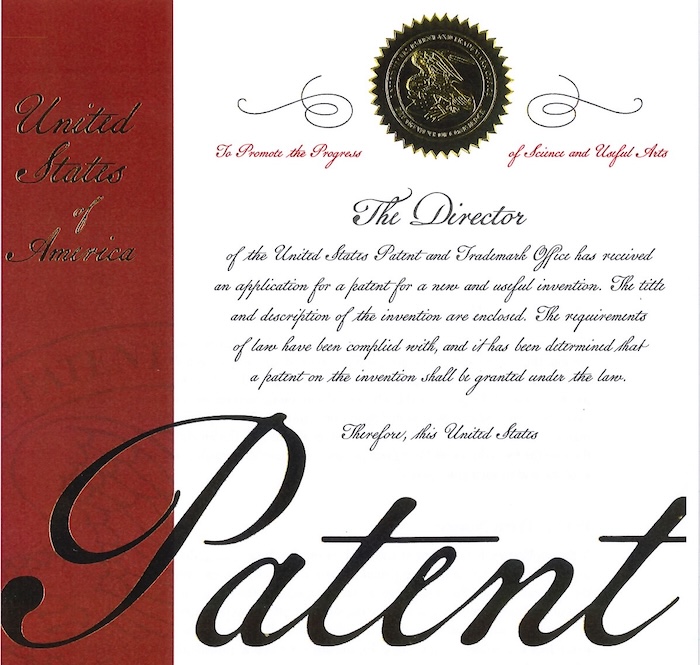
The Positioning Jig (with the inserted Tool Guide) is mounted onto the Mini-Stereotactic Frame and restricts drill bits to exactly follow the pre-planned linear path. And we have patented this technology worldwide.

If you use OtoJig for cochlear implantation (CI), our Round Window Opener and our Insertion Tube are exclusively designed for the atraumatic FLEX electrodes from MED-EL, to simplify the insertion through the completely minimally invasive drilled canal.


Portrait Prof. Thomas Lenarz.
“We are very confident that the OtoJig system will prove to be an indispensable tool as an assistant in this demanding microsurgery.” — Prof. Lenarz
Why?

Key Features & Expected Benefits


It is our goal to demonstrate the following potential clinical benefits of using our technology.

Feature
Performance
potential Benefits2

Single small drill tunnel

  • A minimally invasive procedure that removes significantly less of the healthy bone tissue 5
  • Short drilling duration5
  • Standardized surgery6
  • Preservation of healthy tissue
  • Shorter surgery & anesthesia2
  • Potentially less acoustic trauma2

Tool guidance in Positioning Jig

  • Surgical tools stay on pre-planned path
  • Keep distances to risk structures
  • Less dependence on manual dexterity and surgeons' experience
  • No need to counteract patient movements under local anesthesia7
  • Potentially safer2
  • Consistent high quality treatment in all clinics2
  • Enabling more surgeries under local anesthesia2
  • Outpatient treatment2

Image-based planning in conCIerge

  • Visual understanding of individual anatomy
  • Surgeons can define the optimal access path8
  • Plan CI electrode insertion trajectory
  • Well-informed personalized surgical decisions4
  • Improved hearing preservation in CI3

Round Window Opener

  • Allow inner ear access through the round window
  • Less perilymph leakage9
  • High precision opening with depth-stop
  • Reduced risk of post-operative vertigo2
  • Reduced risk of infection2
  • Reduced risk to damage the inner ear structures10

Insertion Tube

  • Covers the canal
  • Less sudden sideways movements and jitter
  • Advancing in pre-planned direction
  • Easier electrode insertion
  • Less intra-cochlear trauma
  • Consistent and potentially improved hearing preservation CI
  • Allow more surgeons & hospitals to perform CI
Milestones & Awards

Roadmap


To be clear, our medical products are not yet placed on the market. Here is the chronological listing of our major achievements and awards with an outlook for the next steps ahead.

2014 💶 Research grant

BMBF research project RoboJIG (13GW0019E, 2014-2018) with HörSys GmbH, Fiagon GmbH, MHH and LUH.

RoboJig patent document screenshot
2015 💡 Invention

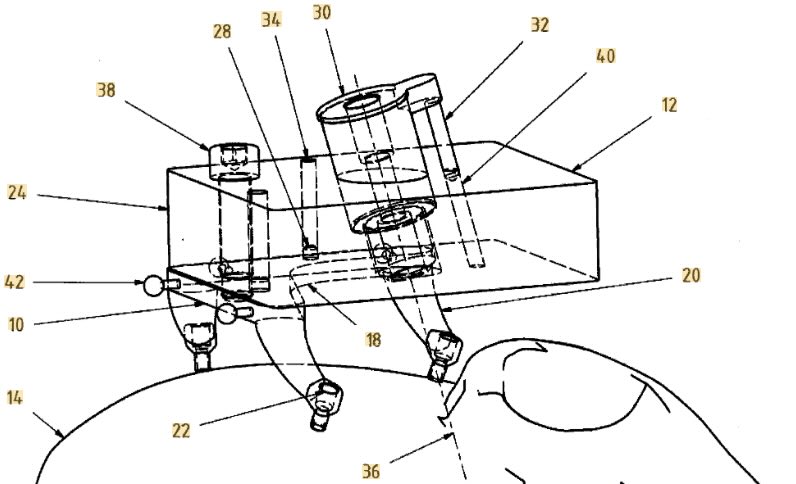
Invention of the "Positioning aid for surgical procedures" by Prof. Prof. h.c. Dr. med. Thomas Lenarz, Prof. Dr.-Ing. Tobias Ortmaier, Prof. Dr. med. Omid Majdani, Dr.-Ing. Thomas Rau, Dipl.-Ing. Marcel Kluge, Dr.-Ing. Jan-Philipp Kobler, and Dipl.-Inform. Samuel John.

Invention patent drawing showing the jig-based surgical guidance concept
2018 🚀

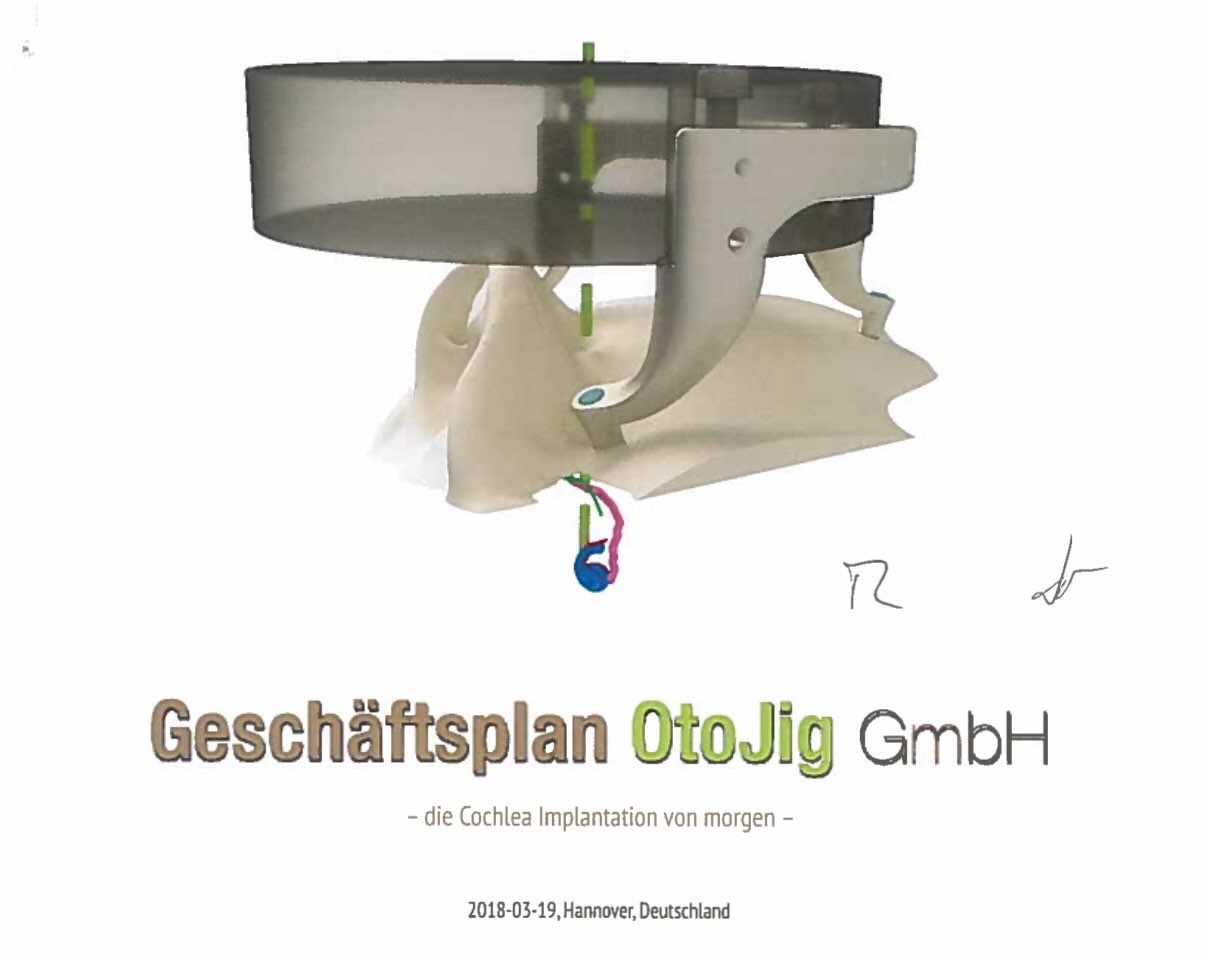
Founding of the OtoJig GmbH (2018-03-19) with our strategic investor MED-EL. Founding members working at the company: Samuel John (CEO), Marcel Kluge (CTO).

Business plan document for OtoJig GmbH
2018 – 2021 💶 Research grant

BMBF research grant KLINOPCI – KLINische OPtimierung für minimal-invasive Cochlea-Implantationen (FKZ 13GW0265A, 2018–2021) with MHH and Carl von Ossietzky Universität Oldenburg, Universitätsklinik für Hals-Nasen-Ohren-Heilkunde.

KLINOPCI research project logo
2019 – 2021 💶 Research grant

NBank research grant EISCI – Entwicklung von innovativen Sicherheitskonzepten für die minimal-invasive Cochlea-Implantation, Innovationsförderprogramm FuE In Unternehmen.

Logo EU EFRE grant
2019 🏆 Award

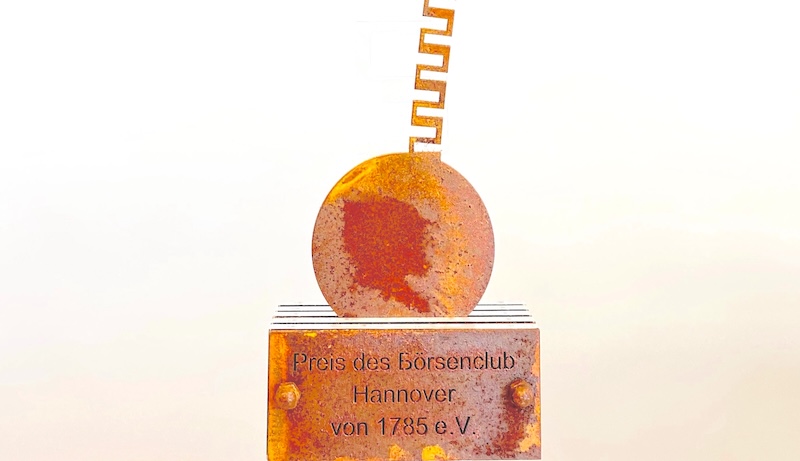
OtoJig received the prestigious award of the Börsenclub Hannover from 1785 e.V. for startups in the category "medical technology".

Börsenclub Hannover award sculpture for OtoJig
2020-2024 💶 Research grant

BMBF research project OtoTrak — "Minimalinvasive Trajektorienplanung für chirurgische Zugänge der Otobasis, Teilprojekt Bildverarbeitungsalgorithmen für die multifaktorielle Trajektorienauswahl" (13GW0367A) in the category image-guided diagnostic and therapy – new Approaches to Intervention. Project partners MHH, Fiagon GmbH, ME Meßsysteme GmbH.

Börsenclub Hannover award 2019
2023 🏆 Award

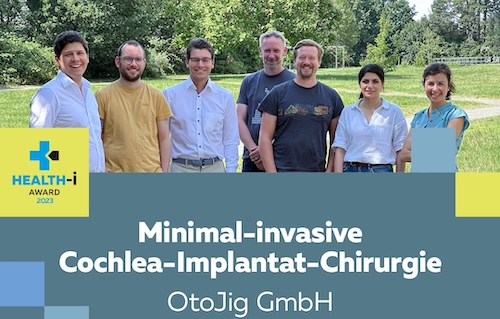
Health-i award! OtoJig is among the top ten German healthcare startups!

Health-i award 2023 recognizing OtoJig as a top German healthcare startup
2025 ✅ Milestone

Finalization of verification and usability evaluation with representative devices.

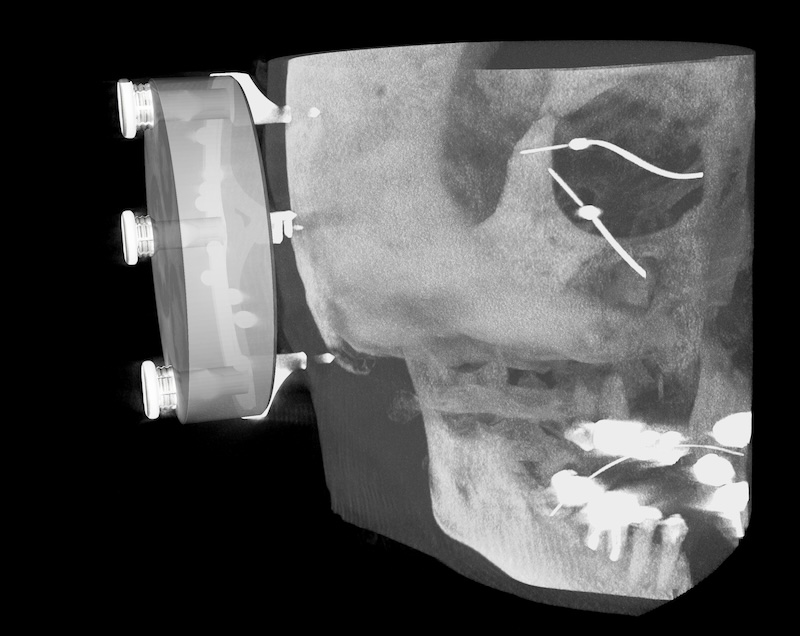
CT scan showing our Mini-stereotactic frame and X-Ray Marker with Jig Fastener attached to a skull.
2026 ✅ Milestone

Ethics approval for a pivotal clinical investigation at MHH.

2026 🎯 Planned

Completion of the study and start of MDR certification.

2027 🇩🇪 Planned

Anticipated CE-marking and market start in Germany.

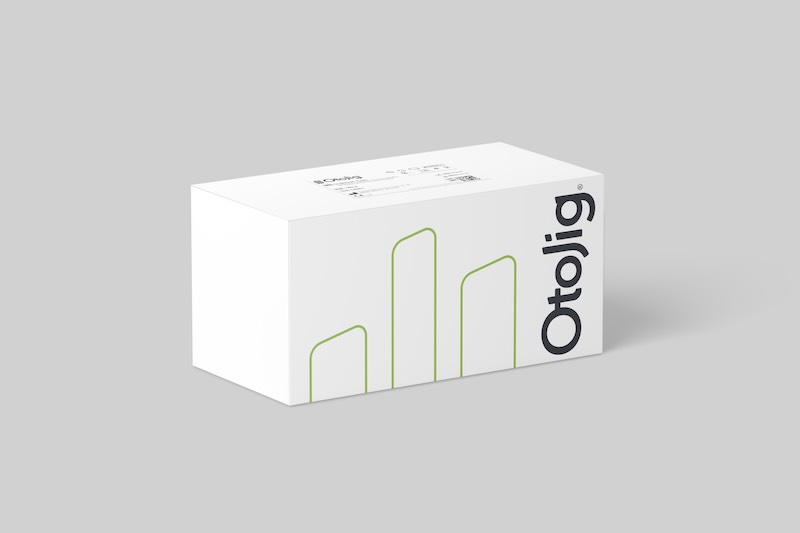
OtoJig package. A white box with parts of the artistic OtoJig logo.
2028 🌍 Planned

Availability in more MDR countries. 🇪🇺🇳🇴...

About OtoJig

Team & Culture